Everywhere you hand over a copy of yourself today.
At the door, at the counter, at the bank, on the phone. Each place below is somewhere you hand over something about yourself today, and what happens with SigWave instead: they ask, your phone answers, and you decide what they get.
We are already building most of these, and we have confirmed that every one is technically feasible under our patent-pending design.
Each scene carries one of three labels. Live means it works in SigWave today: at sigwave.id for anyone, and in the SigWave app, which is in testing with a small group. Built in Synap means it works today in Synap, Synaping's personal knowledge system, a separate product from the same company. In development means we are working on it now.
Checking works for anyone at sigwave.id/scan. Answering and signing happen in the SigWave app, which is in testing.
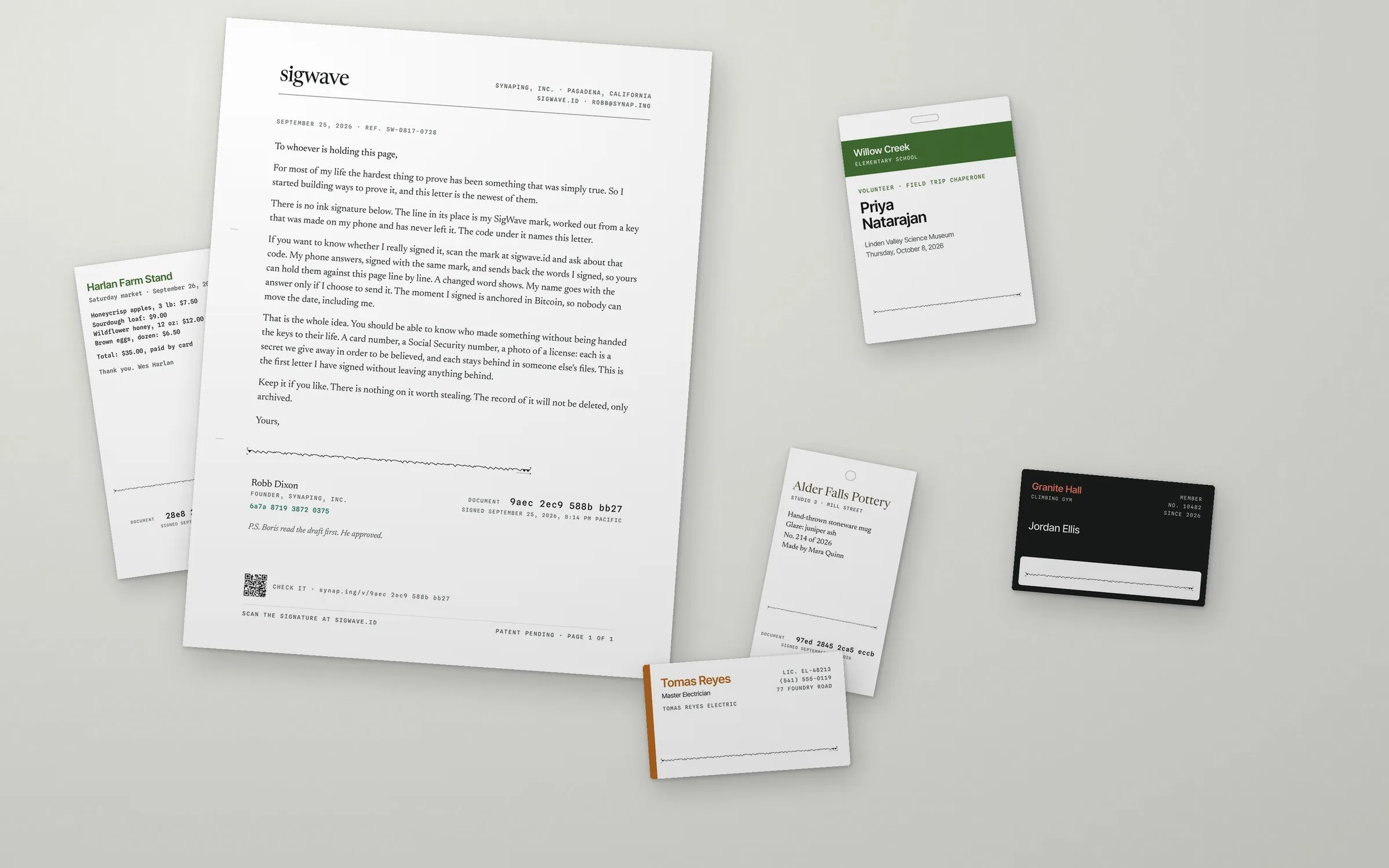
Every photograph on this page is a staged sample: a real mark on a sample business's card, badge or label, placed into a made-up scene. The people and businesses in them are not real.
Know who it is before you open the door.
A ride, a stranger, a knock, a school gate and a call work today. The lost dog and the parked car are in development.
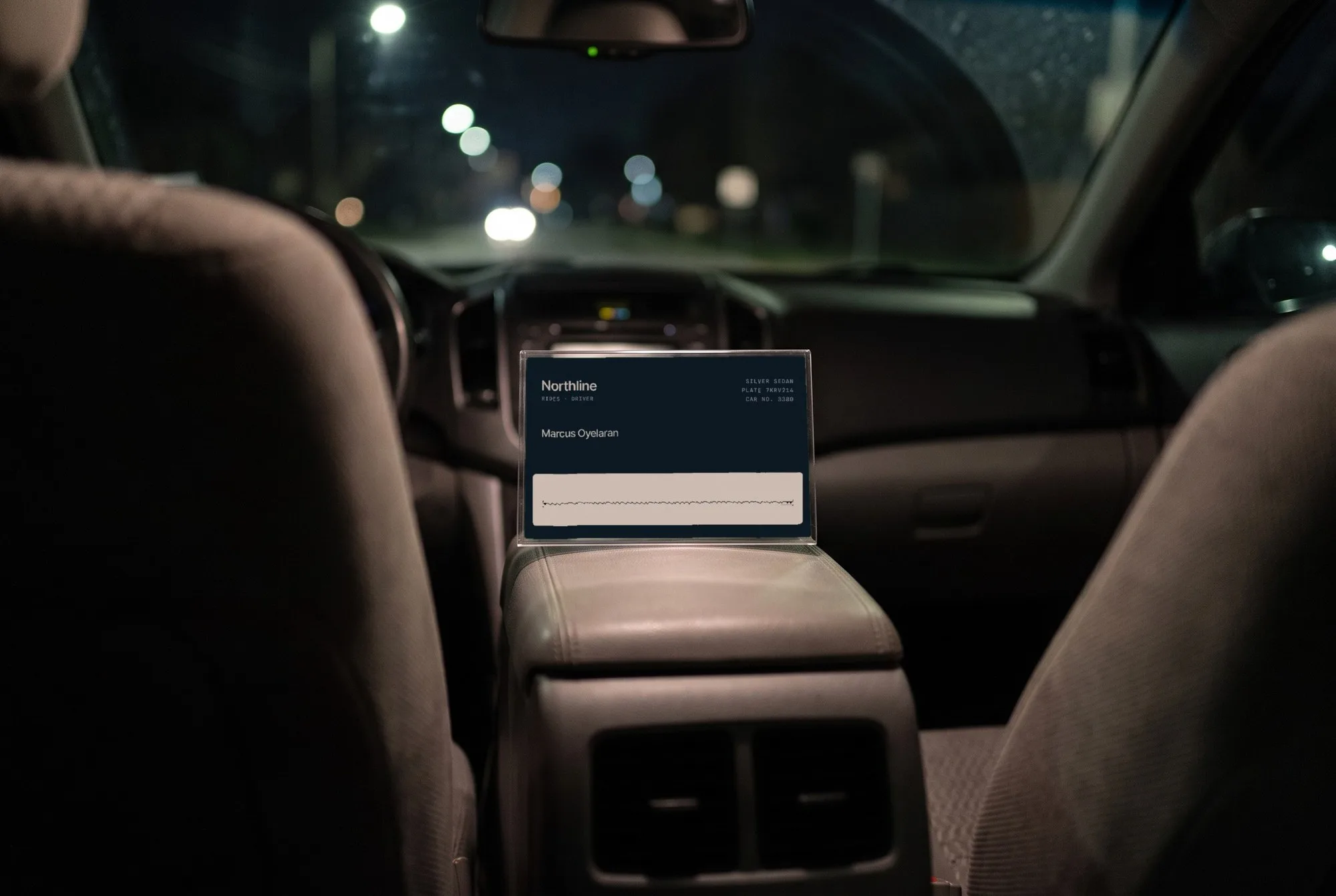
A ride, checked from the back seat
The driver's card on the console carries the driver's mark. Before the trip starts, you scan it with your phone and ask the driver's mark a question, such as whether they hold a current license. Their phone answers yes or no, and you both keep a receipt.
You can also ask the driver a question. Only the driver's own phone can answer it.
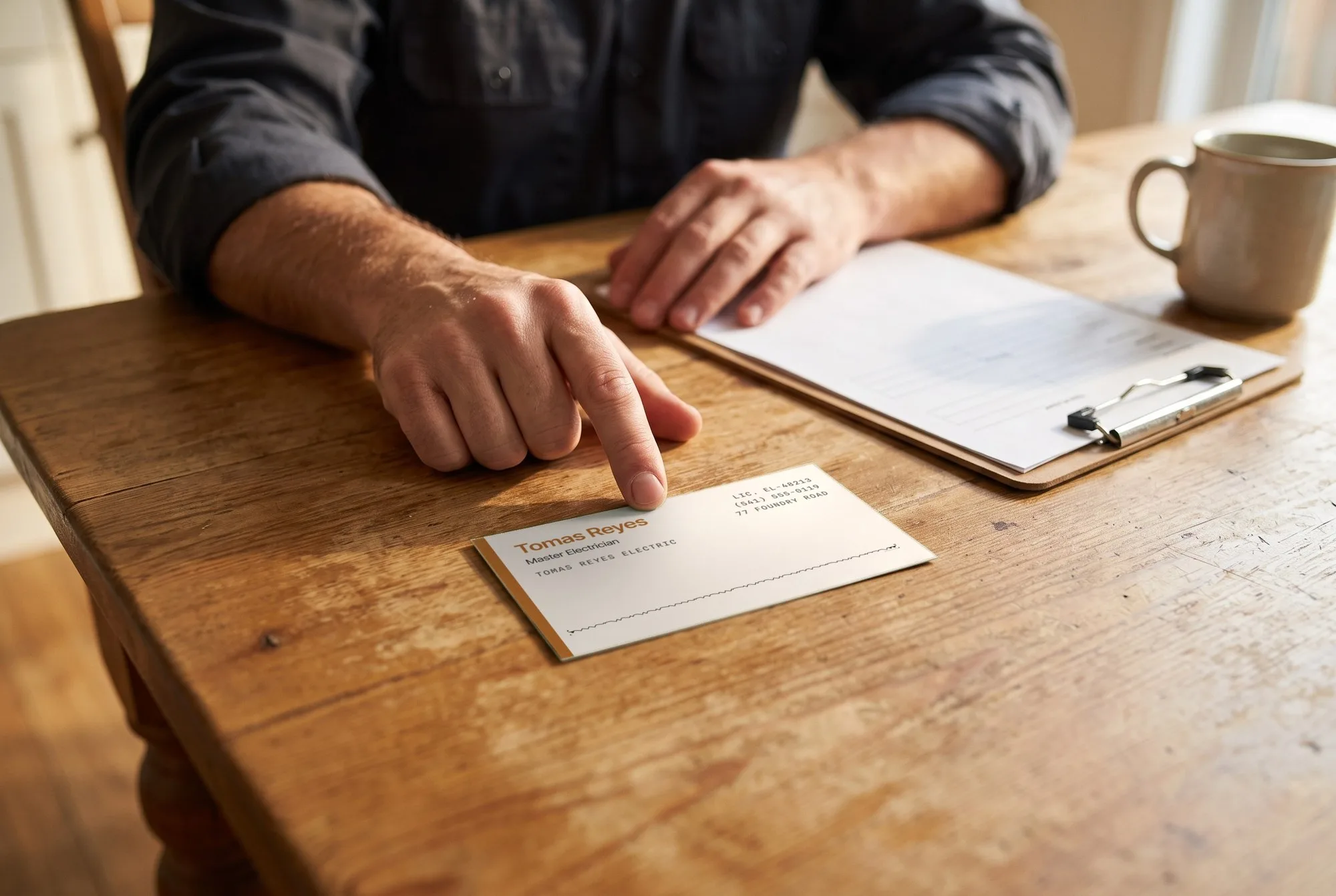
A contractor you have never met
He hands you his card. Anyone can print a name and a license number on a card. The mark is the part nobody can fake: scan it, and ask his mark whether his electrical license is current. His own phone answers, and you both keep a receipt.
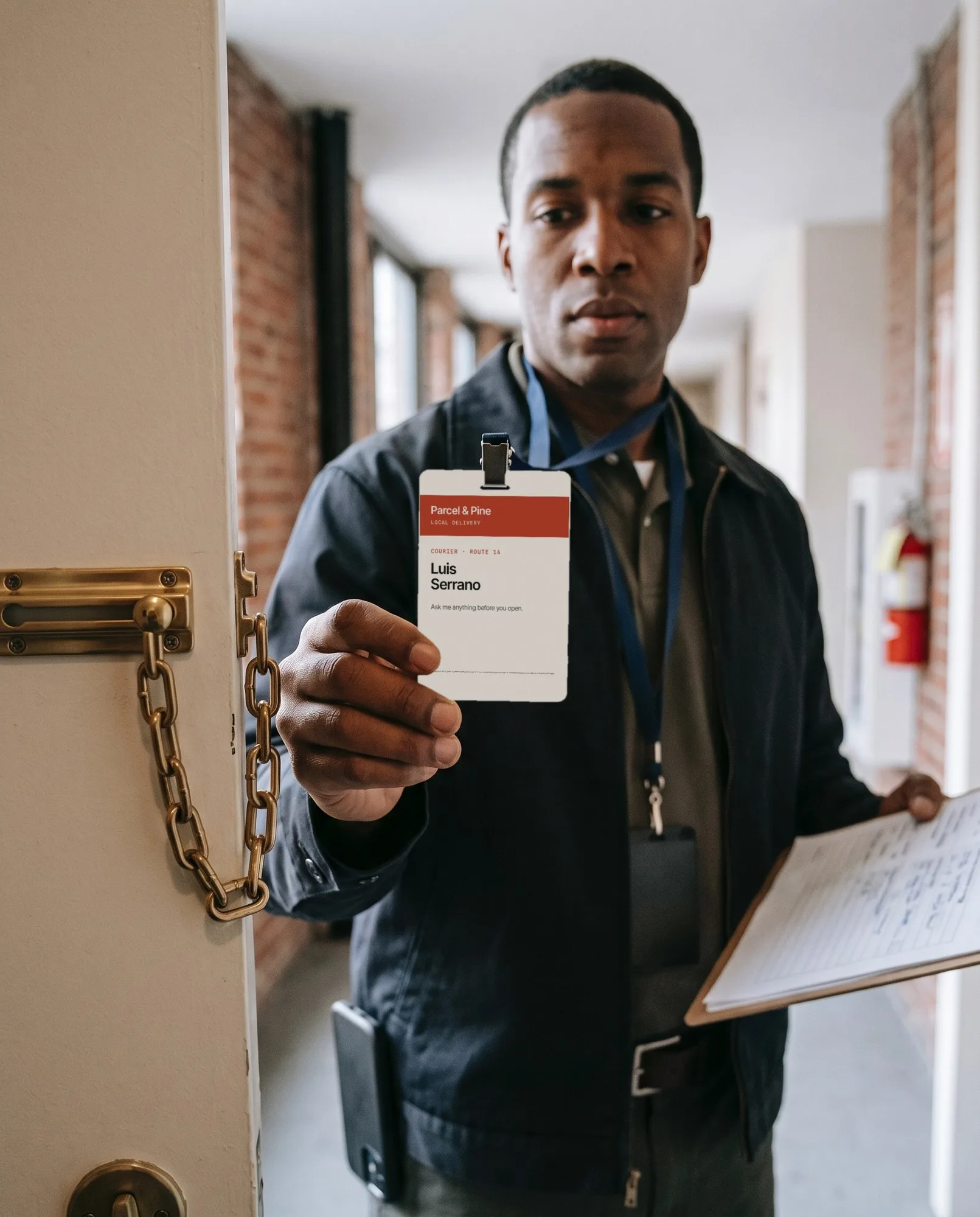
A courier at the door
Someone knocks and says they have a delivery. With the chain still on, you scan the mark on their badge and ask a question. Only a phone on that mark's own list can answer, so a copied badge stays silent.
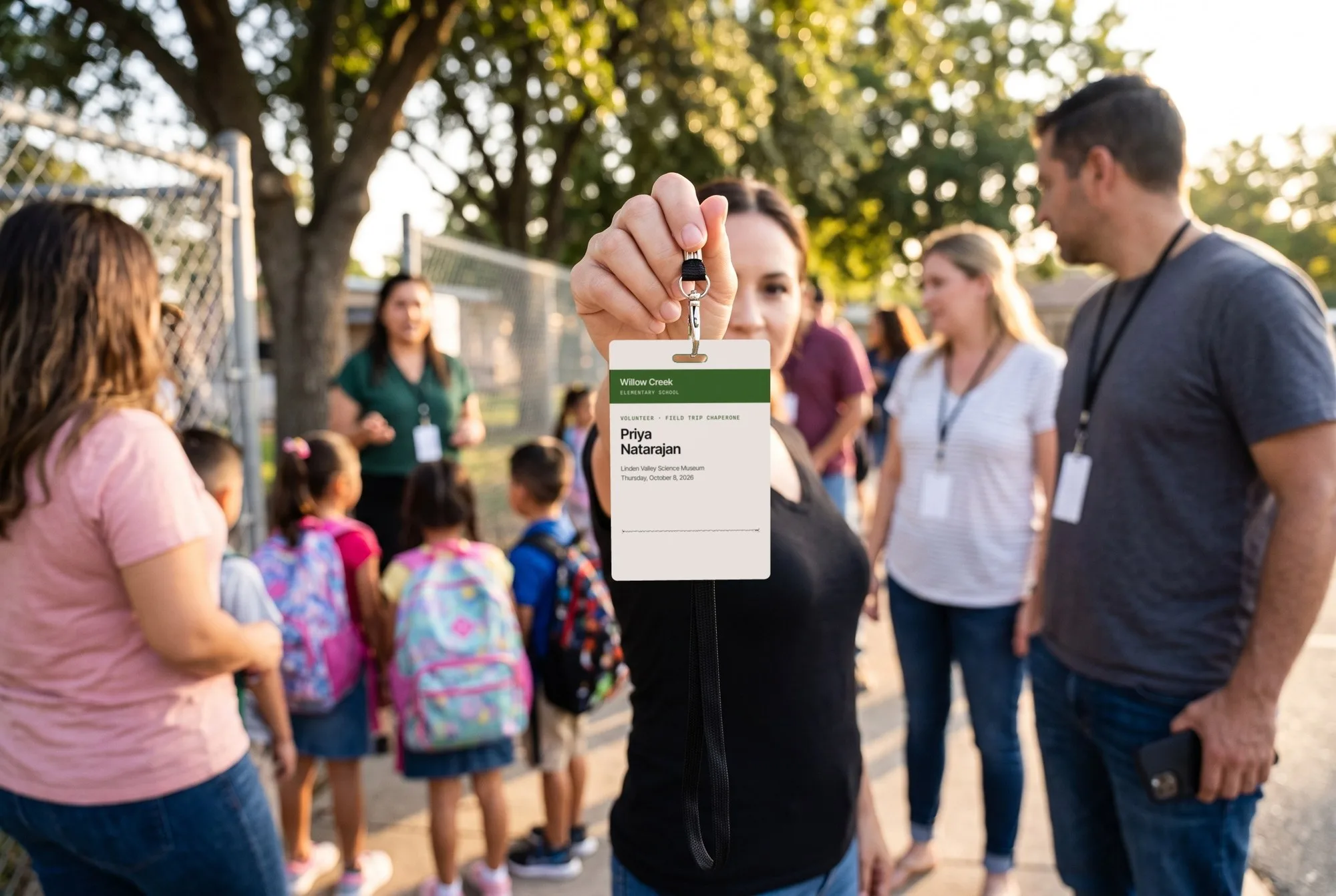
School pickup
An adult at the gate says they are here for a child. The teacher scans the mark on their badge and asks before the child leaves with them. Only the phone that belongs to that mark can answer, and the teacher can compare the mark with the one the family gave the school.
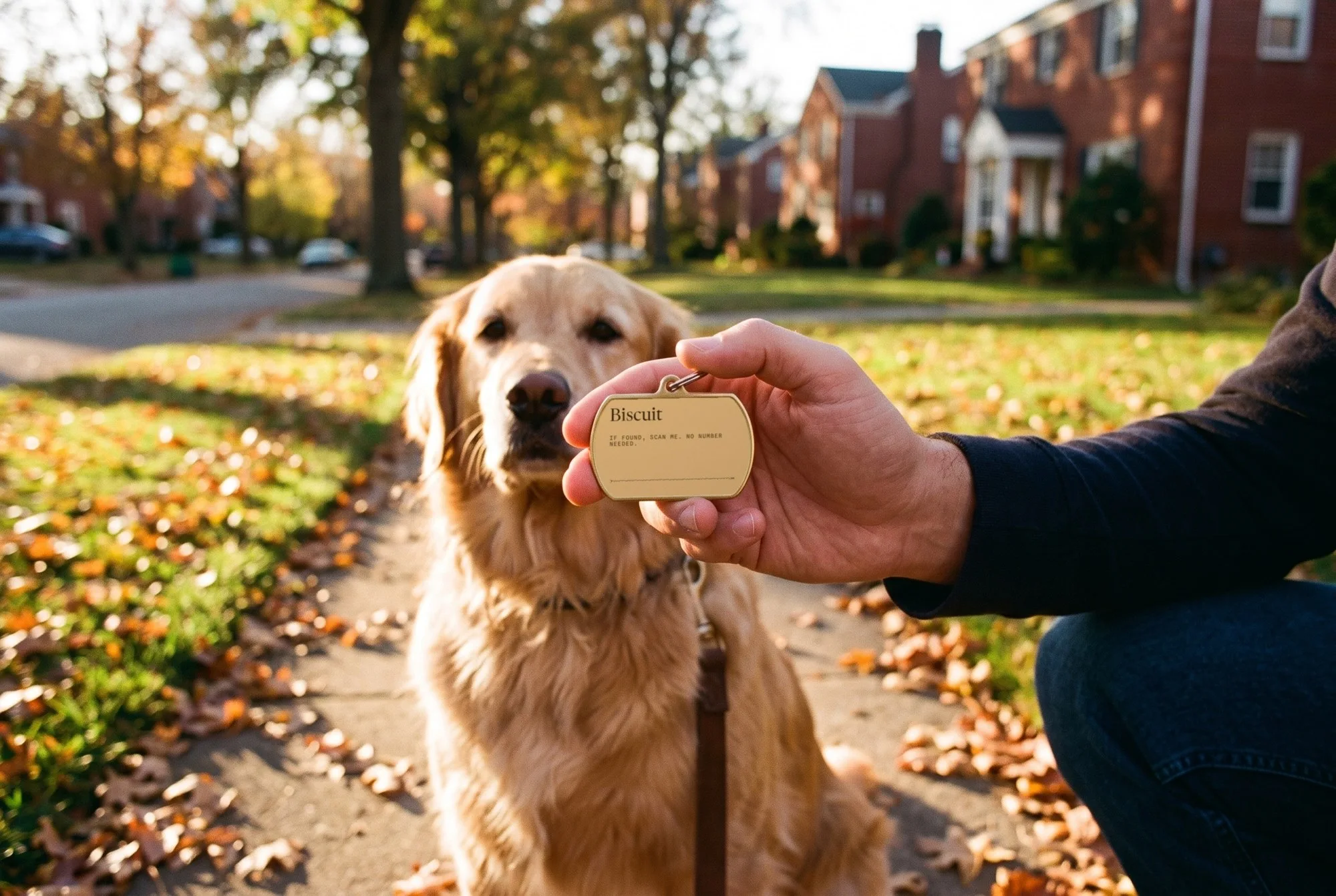
A lost dog, and no number on the tag
Biscuit's tag reads If found, scan me. No number needed. A stranger who finds the dog scans the mark and reaches the owner through it. The owner's address and phone number never go on the tag.
Today an ask is a set of yes or no questions. A message to the owner is what we are building.
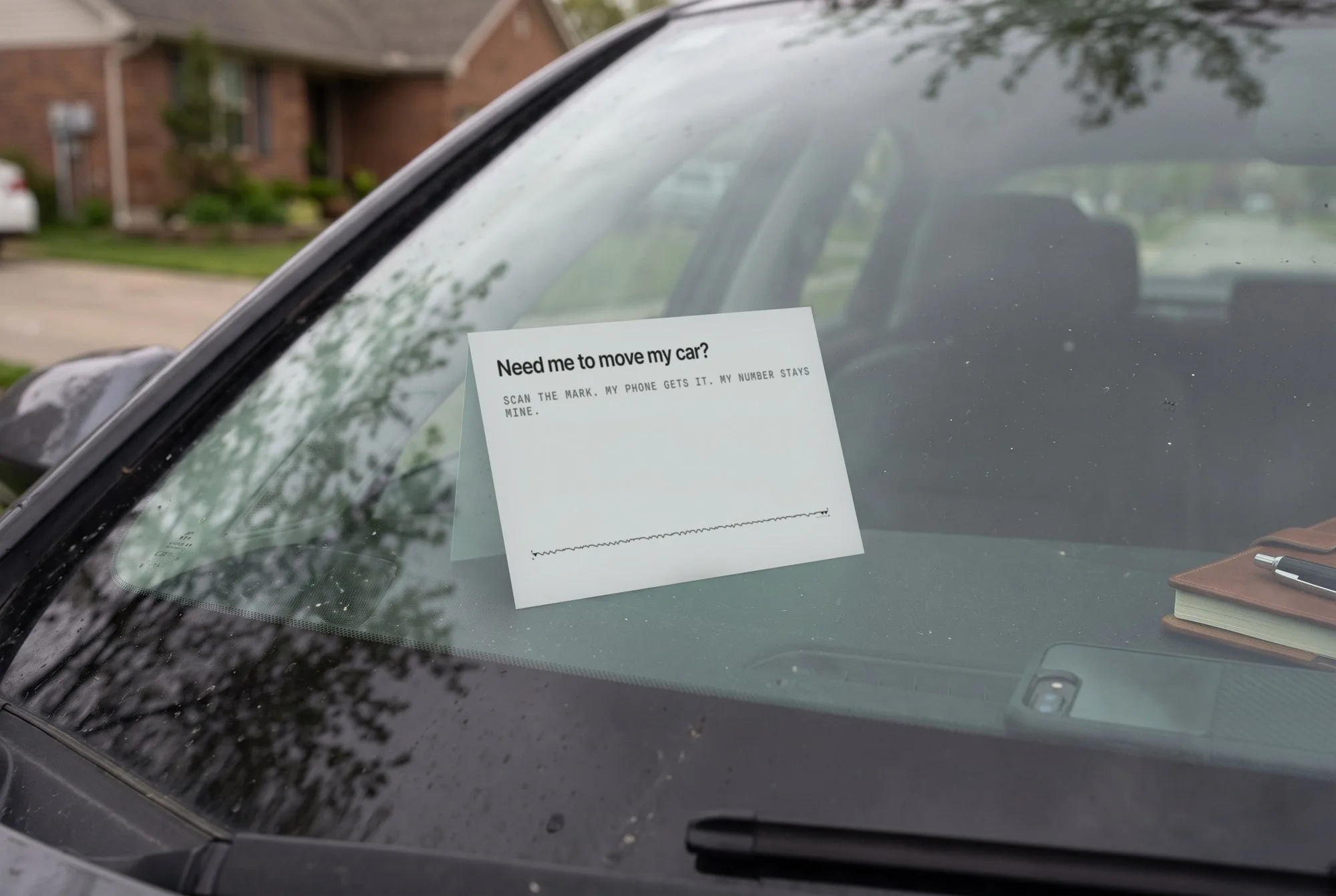
A parked car, and no number in the window
A card on your dashboard reads Need me to move my car? A neighbor who needs you to move it scans the mark and reaches you. They never see your number.
Today an ask is a set of yes or no questions. A message to the owner is what we are building.

A call you did not expect
A stranger calls, then sends your mark an ask. Your phone shows only what they call themselves, "Says it is Grace Whitfield," and never says that they are. You see their own words and the exact question, and you can decline and send nothing.
A phone call that shows the caller's mark before you pick up is in development.
Sign it once. Anyone can check it.
A letter, a label, a mug, a receipt, a certificate, a permit, a card. Each of these works today.
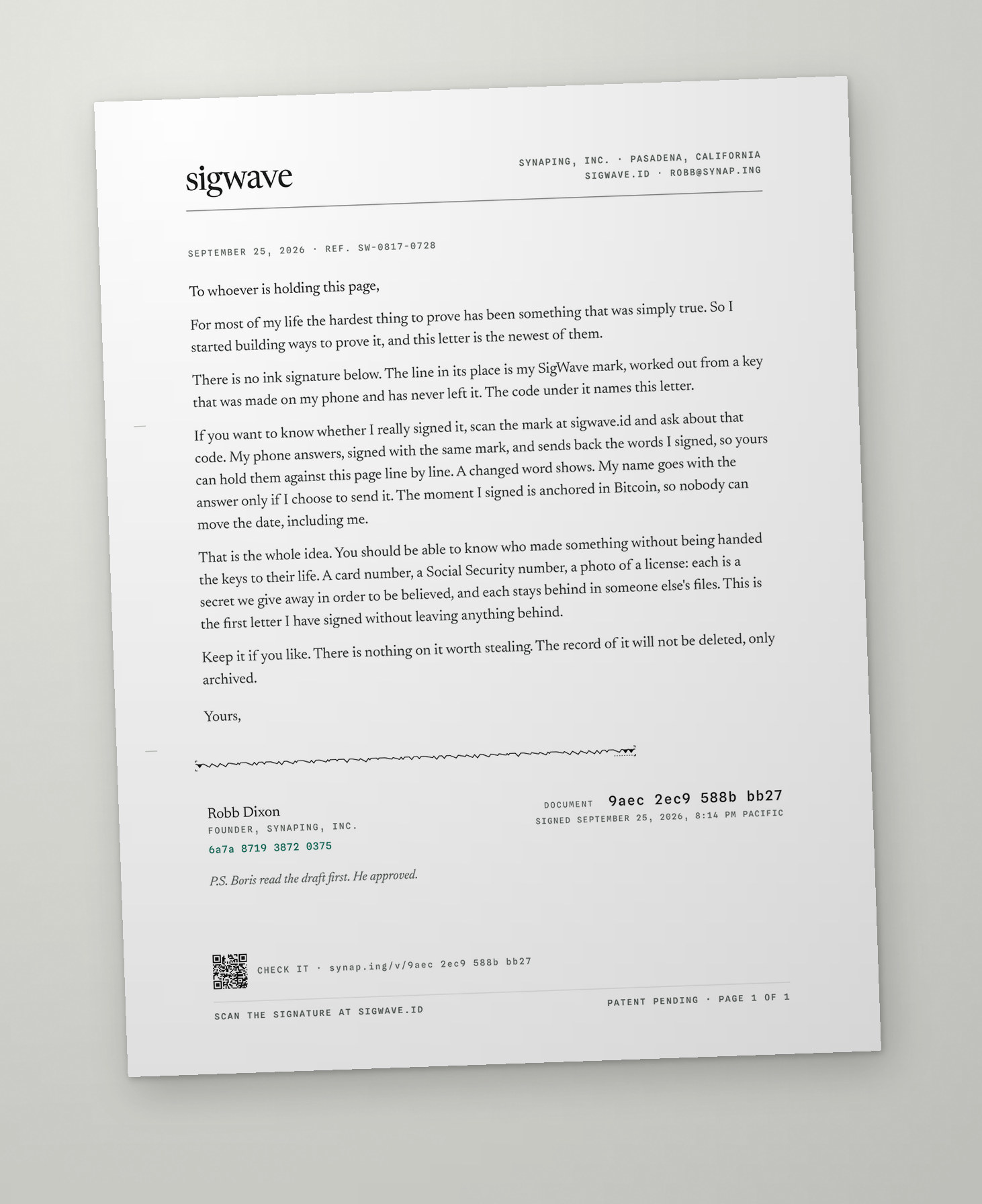
A letter anyone can check
In our test builds of the iPhone app, you sign a letter with Face ID. The printed page carries your mark and a document code. Anyone can point a phone's camera at the page at sigwave.id/scan, no app needed, and it answers Signed, or Changed if a line differs from what you signed, or Not signed. Robb Dixon did this on September 25, 2026. It is a real letter, not a sample.
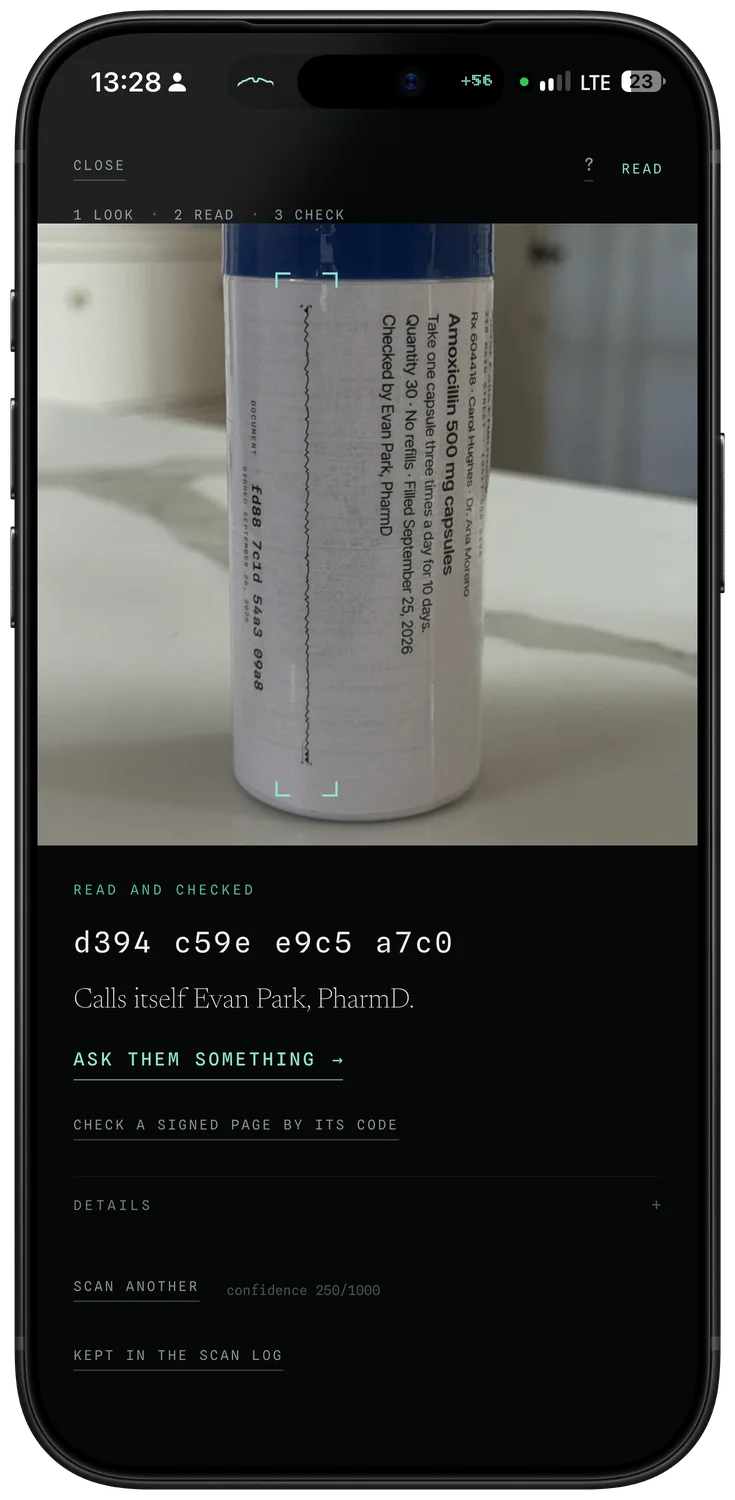
A label at the pharmacy
You are the pharmacist. You sign each bottle's label on your phone with Face ID and choose to let anyone holding it check it. A customer at home points a phone's camera at the label at sigwave.id/scan. It shows the mark the label was signed with and holds the label's lines against what you signed: Signed, or Changed if a word differs. You do not answer for each bottle. The label in the picture is a sample from a made-up pharmacist.
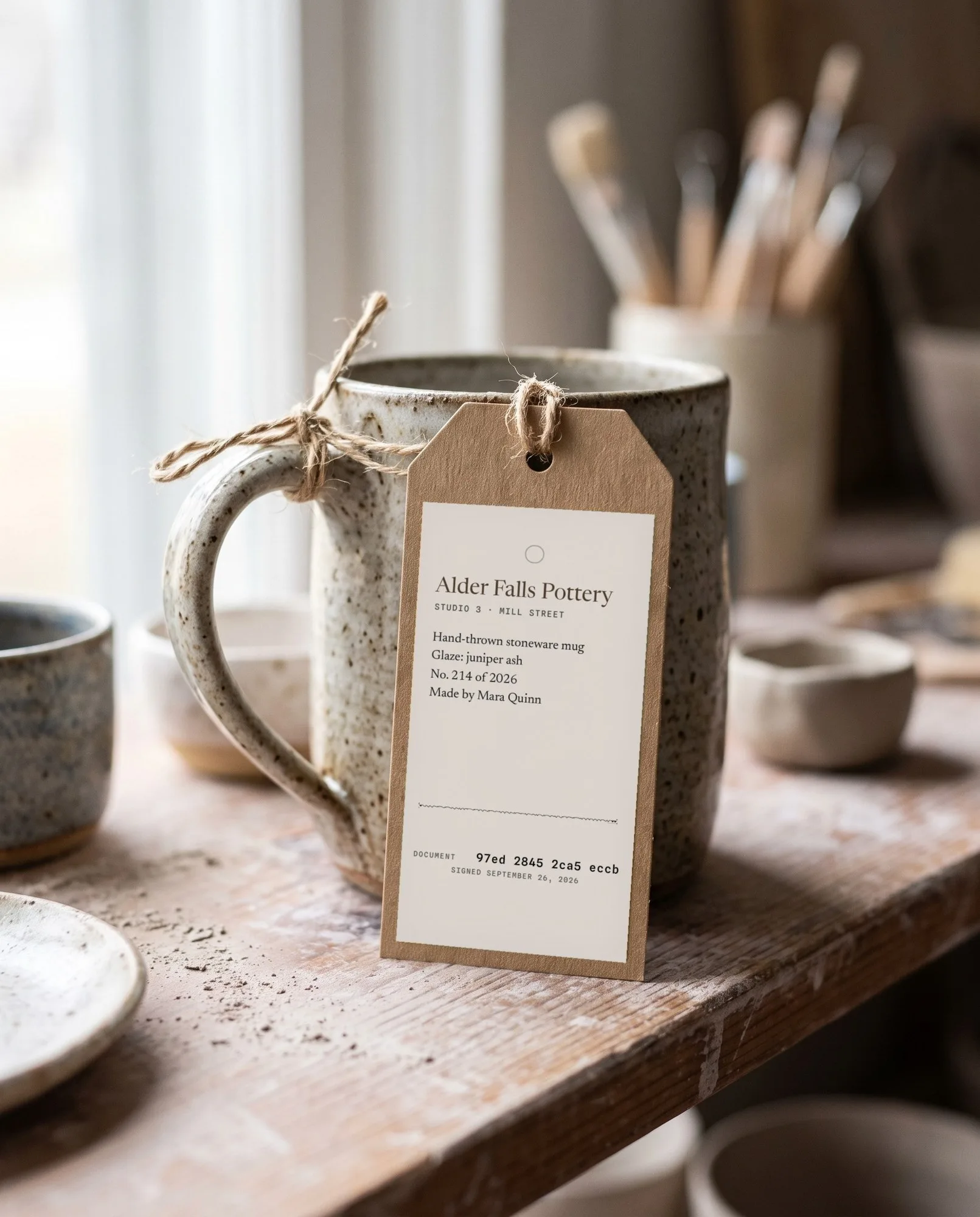
A maker's hang tag
You are the potter. You sign the tag for each mug on your phone with Face ID and tie it to the mug. Whoever holds the mug can point a phone's camera at the tag at sigwave.id/scan and see Signed, and the mark it was signed with, because you chose to publish it. They do not sign up for anything, and the picture never leaves their phone; only the code printed on the tag is looked up.
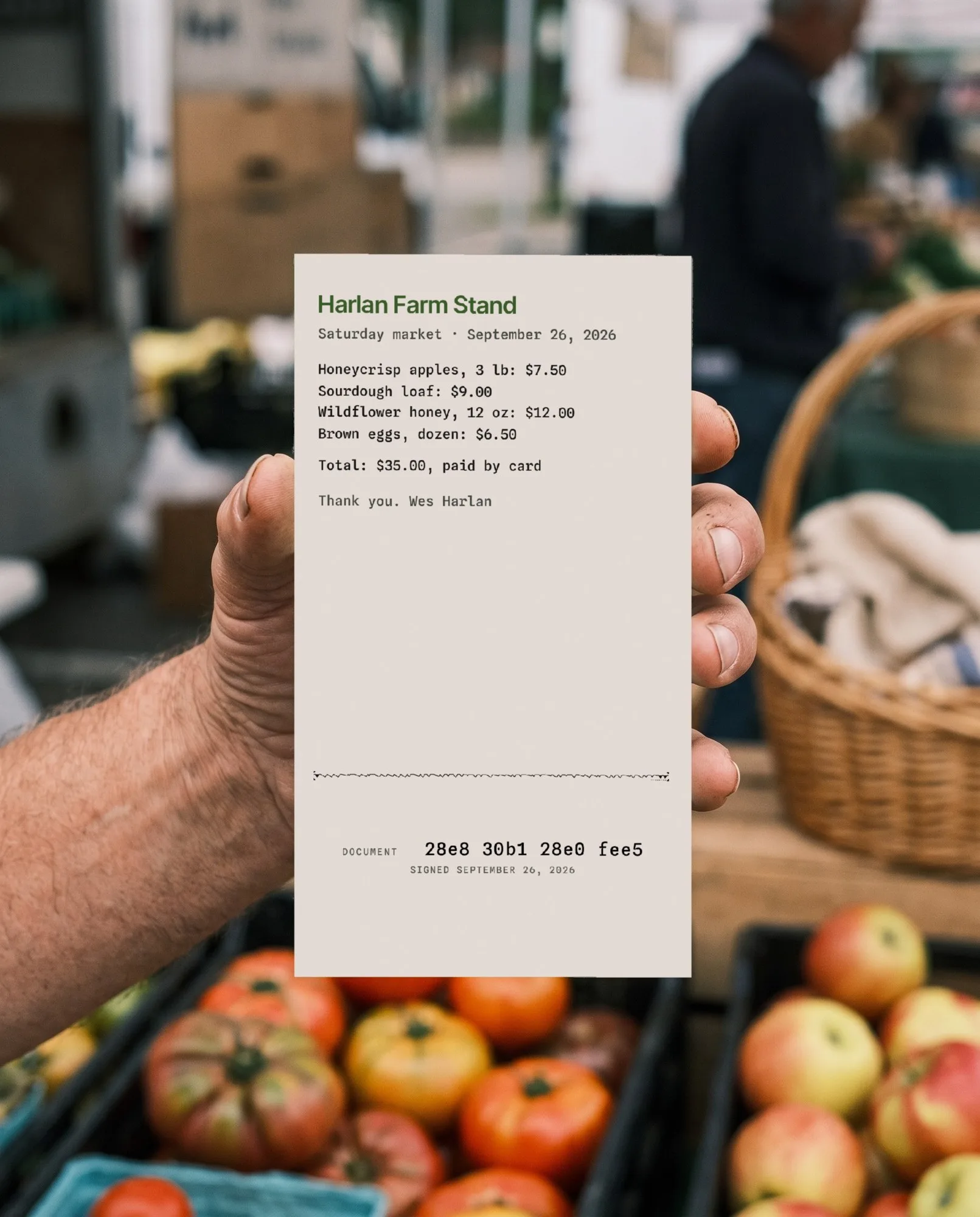
A receipt from a market stall
You sell at the farmers market. You sign your receipts on your phone with Face ID, the same way the potter signs a tag. A customer points a phone's camera at a receipt at sigwave.id/scan and sees Signed, and the mark it was signed with. They do not sign up for anything.
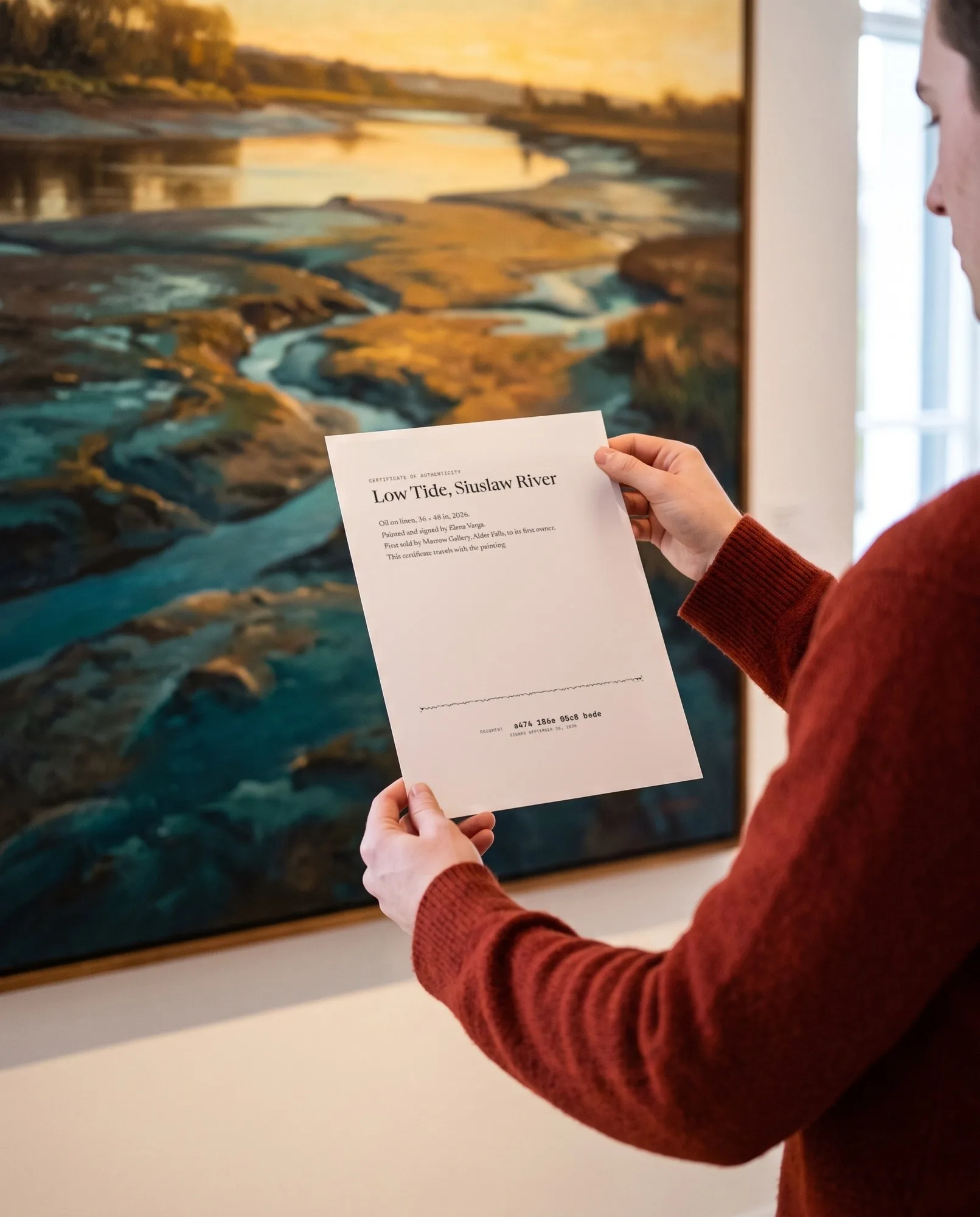
A certificate that travels with the painting
You are the painter. You sign the certificate of authenticity on your phone with Face ID, and it goes with the painting when it sells. Any later buyer can point a phone's camera at it at sigwave.id/scan and see Signed, and the mark it was signed with, because you chose to publish it. If a line differs from what you signed, it says Changed.
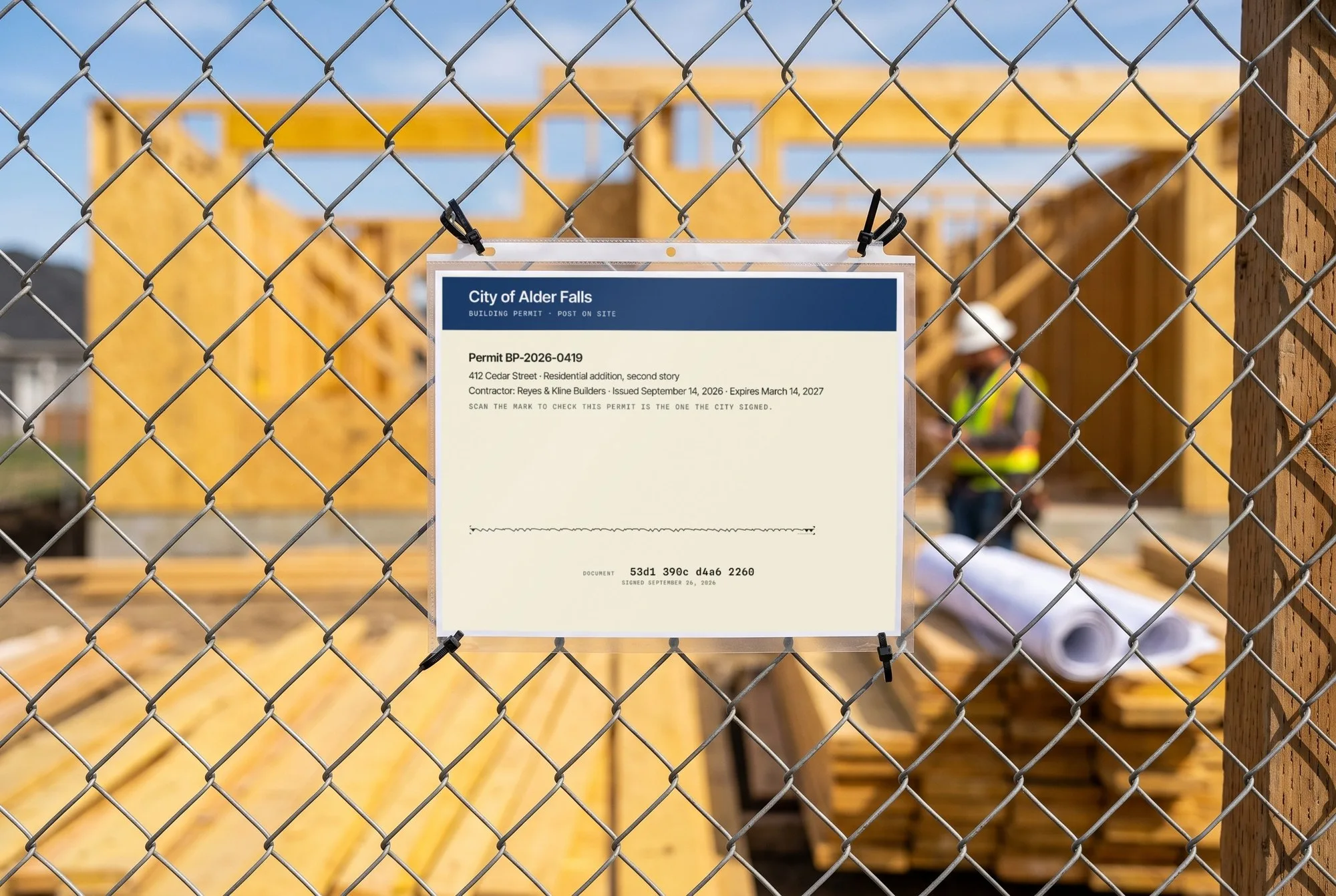
A permit on a construction fence
The building permit on the fence carries a mark and a document code. Anyone walking by can hold a phone over it at sigwave.id/scan. It shows which mark signed the permit and answers Signed, or Changed if a line differs from what was signed.
Checking that the mark really is the city's is in development.
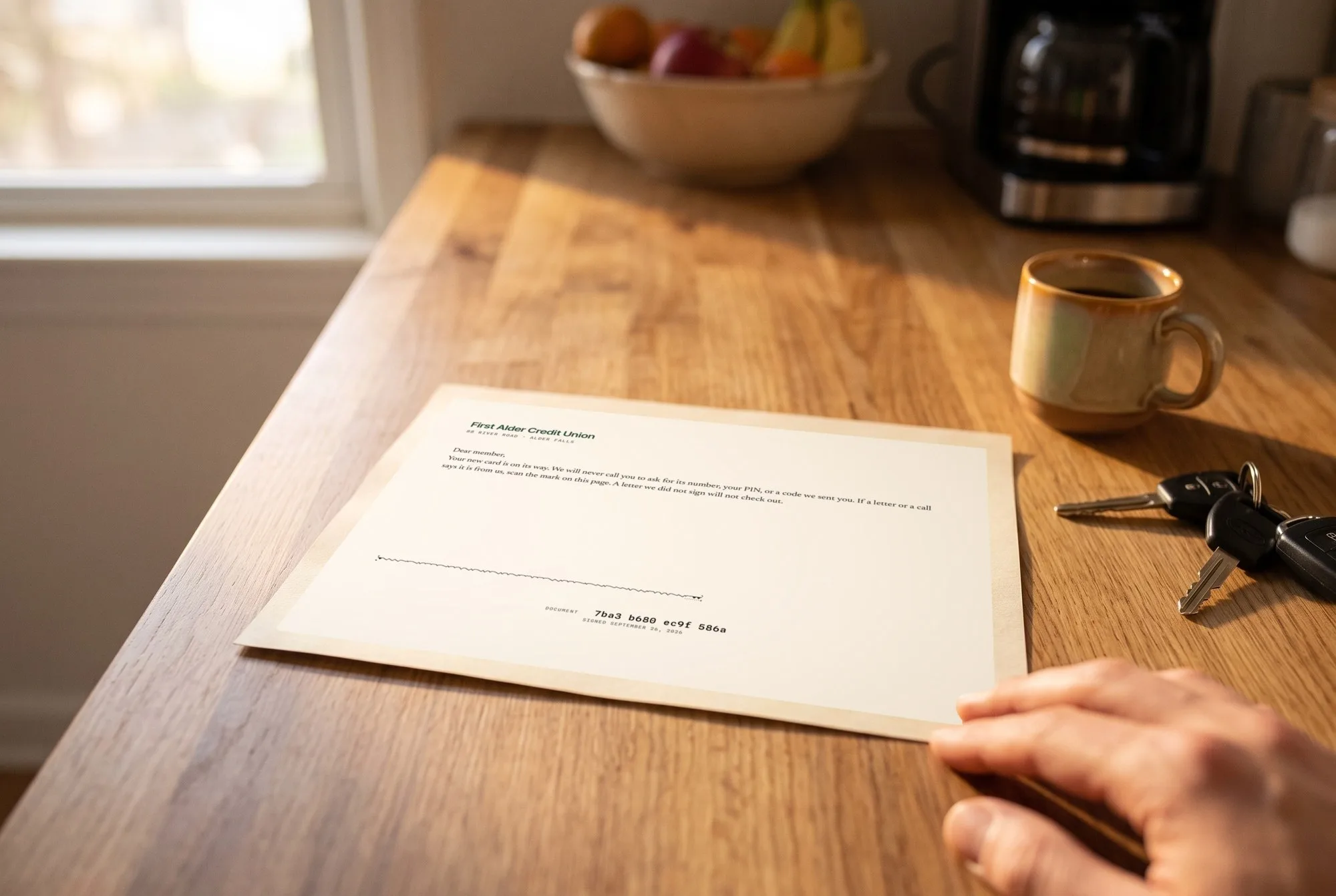
A letter from your credit union
The letter says your new card is on its way, and to scan the mark on the page if a letter or a call says it is from them. You hold a phone over it at sigwave.id/scan. A letter the credit union did not sign will not check out.
Today the check shows which mark signed the letter and whether a line changed. Proving that a mark belongs to the real credit union is in development.
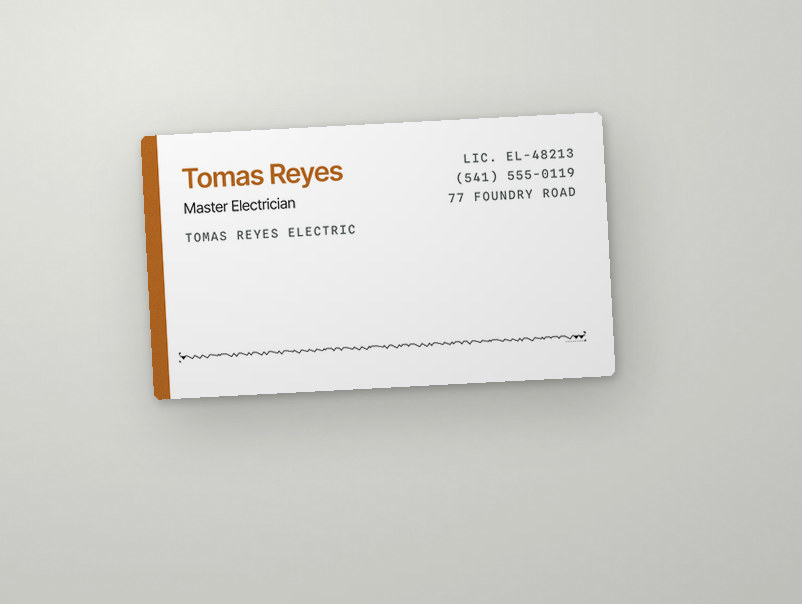
A card nobody can pass off as yours
Your card shows your name and your business, like any card. Someone could copy it and swap in their own phone number. They cannot swap the mark. Anything asked of it at sigwave.id/scan reaches only your phone, so a customer who scans it knows they are dealing with you. The app, in testing, also makes your mark into a profile picture and an email signature, so the same mark goes wherever you do.
Show what they need, and nothing more.
The gym, the field trip, the first shift and the hotel desk work today. The payment is in testing. The door, the ticket and the shop window are in development.
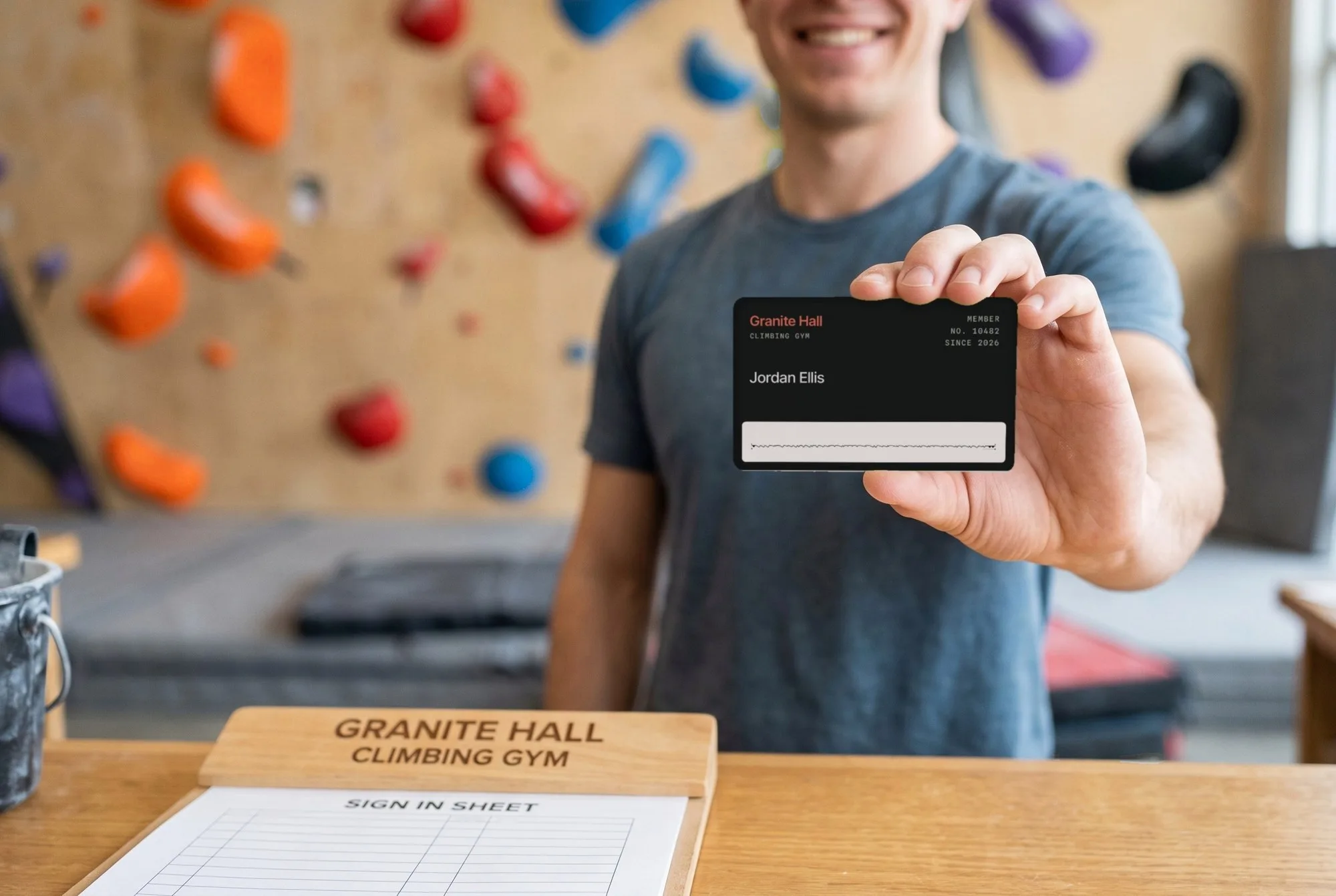
A gym card
Your member card carries your mark. At the front desk they hold a phone over it and ask one thing: over 18? You answer yes with Face ID and sign the gym's form on your phone with the same mark. No license photocopied, and no birth date in the gym's files.
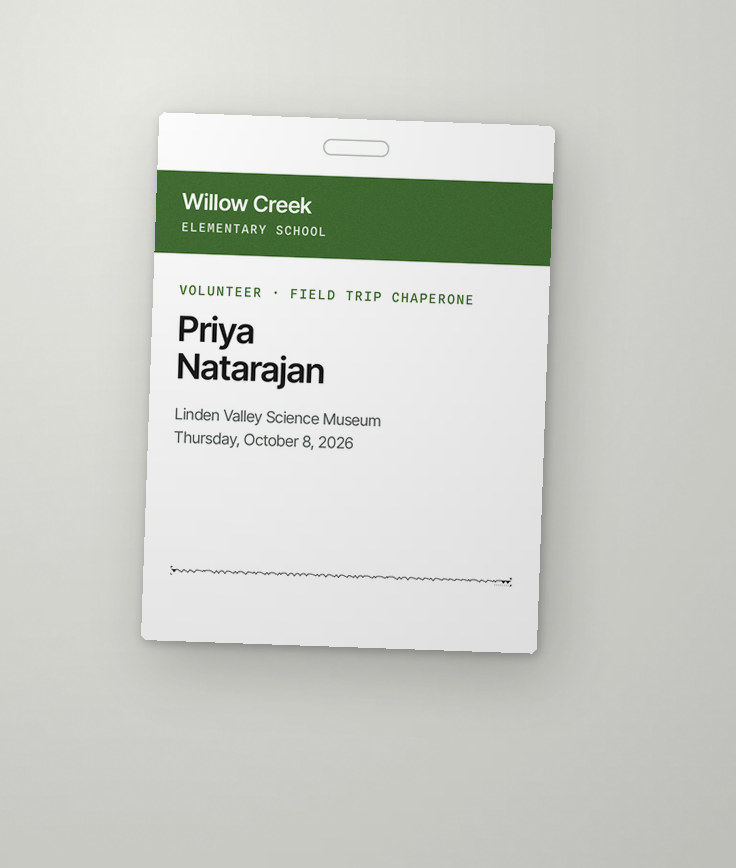
A field-trip badge
You are the chaperone. The badge on your lanyard carries your mark and no name. At the museum door, staff hold a phone over it and ask two things: over 18, and holds a valid photo ID. Your phone shows who is asking. You answer yes to both with Face ID. Both answers are your own word; no office has checked them. Your license stays in your pocket.
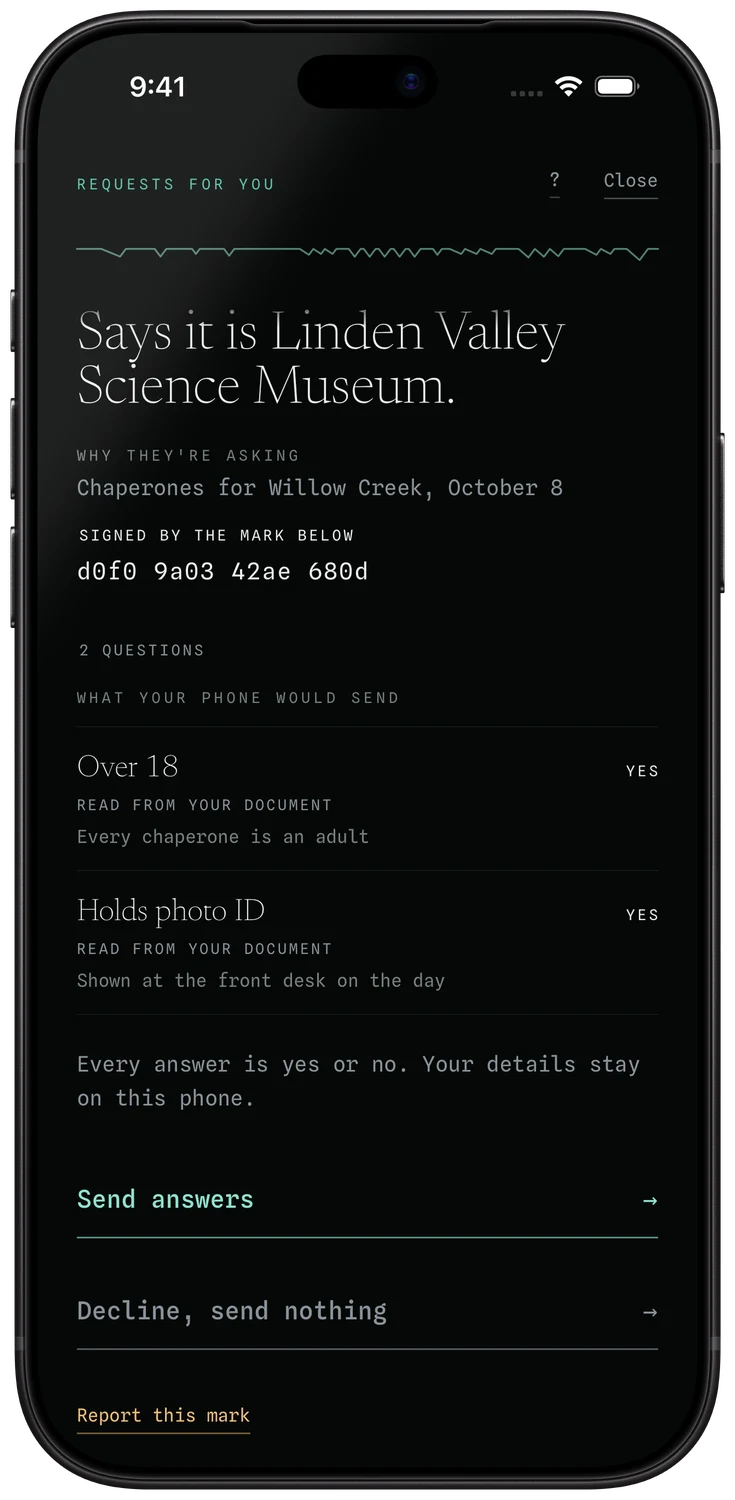
A caregiver, before the first shift
You are the caregiver, and a family is about to leave their child with you for the first time. They hold a phone over your mark and ask three things: over 18, holds a photo ID, and your first-aid (CPR) training is up to date. You see who is asking and the three questions, and answer yes to all three with Face ID. Each answer is your own word, and only a device on your own list can give it. Next, the place that taught you CPR can stand behind that answer. The place for such a school to join is built on our service, and none has joined yet.
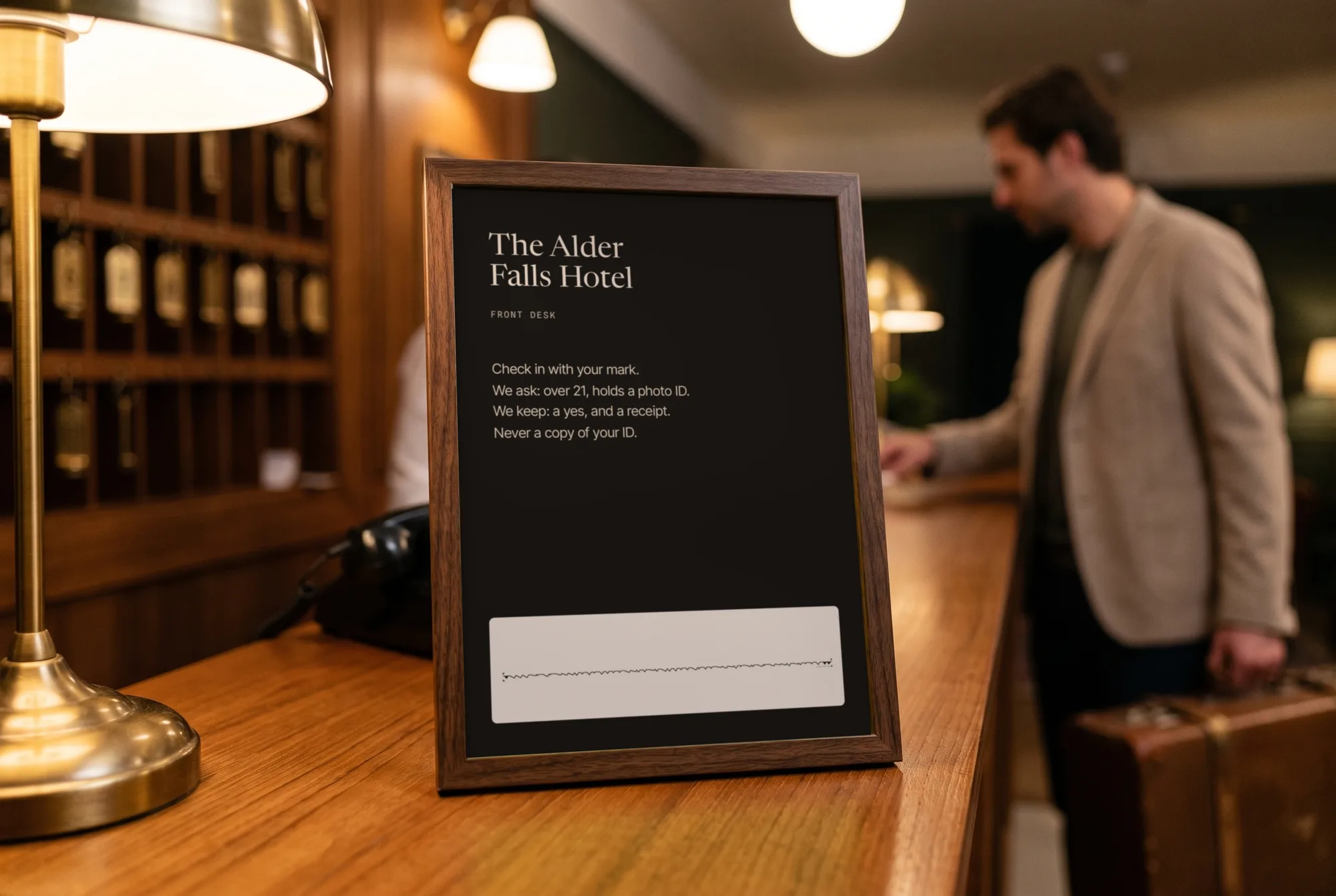
Checking in at a hotel
At the front desk, the hotel holds a phone over your mark and asks two things: over 21, and holds a photo ID. Your phone shows who is asking. You answer yes with Face ID. Both answers are your own word. The hotel keeps a yes and a receipt, never a copy of your ID.
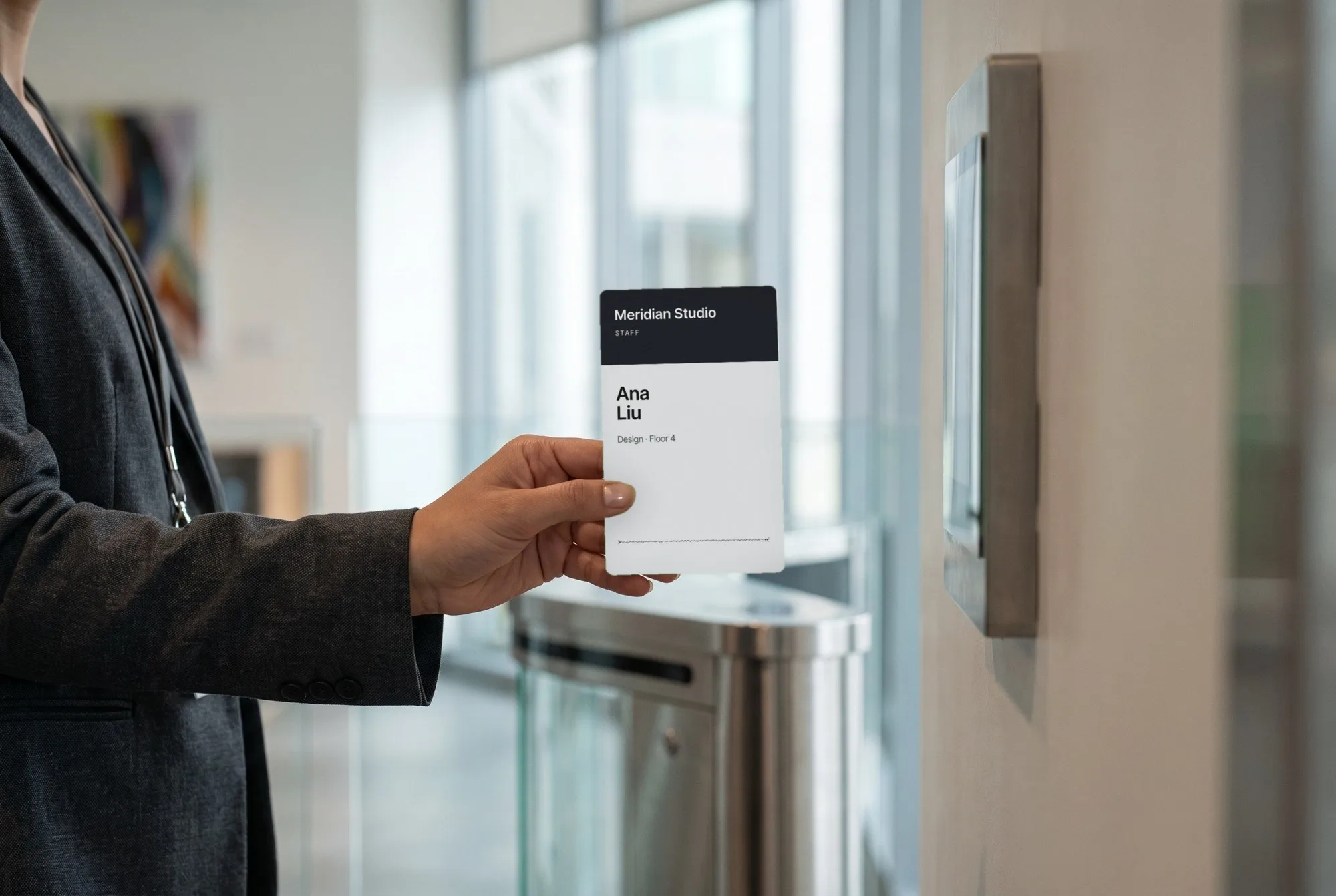
A badge that opens a door
Your office badge carries your mark instead of a number a reader can copy. At the door, the reader asks your mark and your phone answers. A lost badge, or a copy of one, opens nothing on its own.
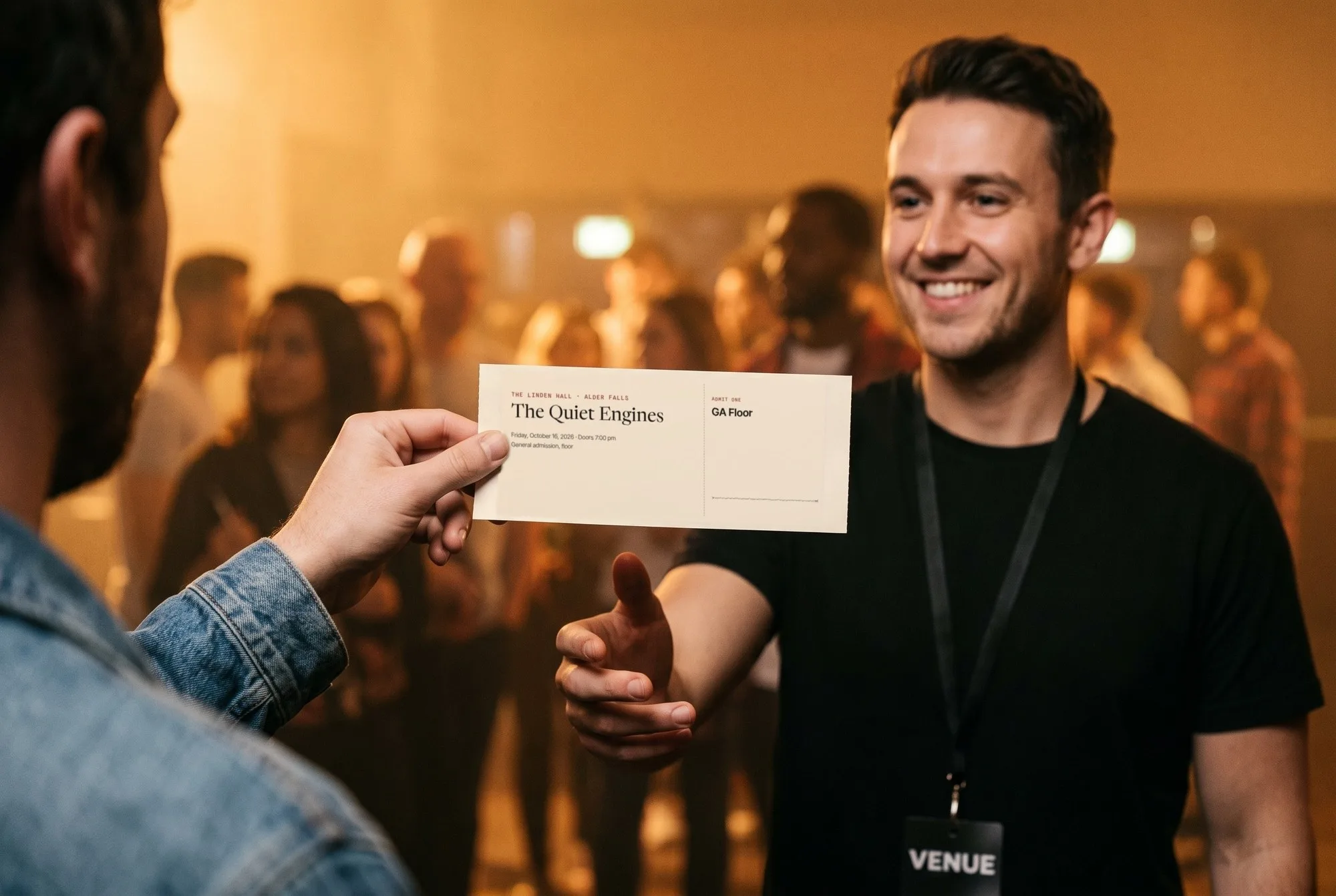
A ticket that only works for you
Your ticket carries your mark. At the gate, the scanner asks the mark, and only your phone can answer. A screenshot or a copy gets no one in.
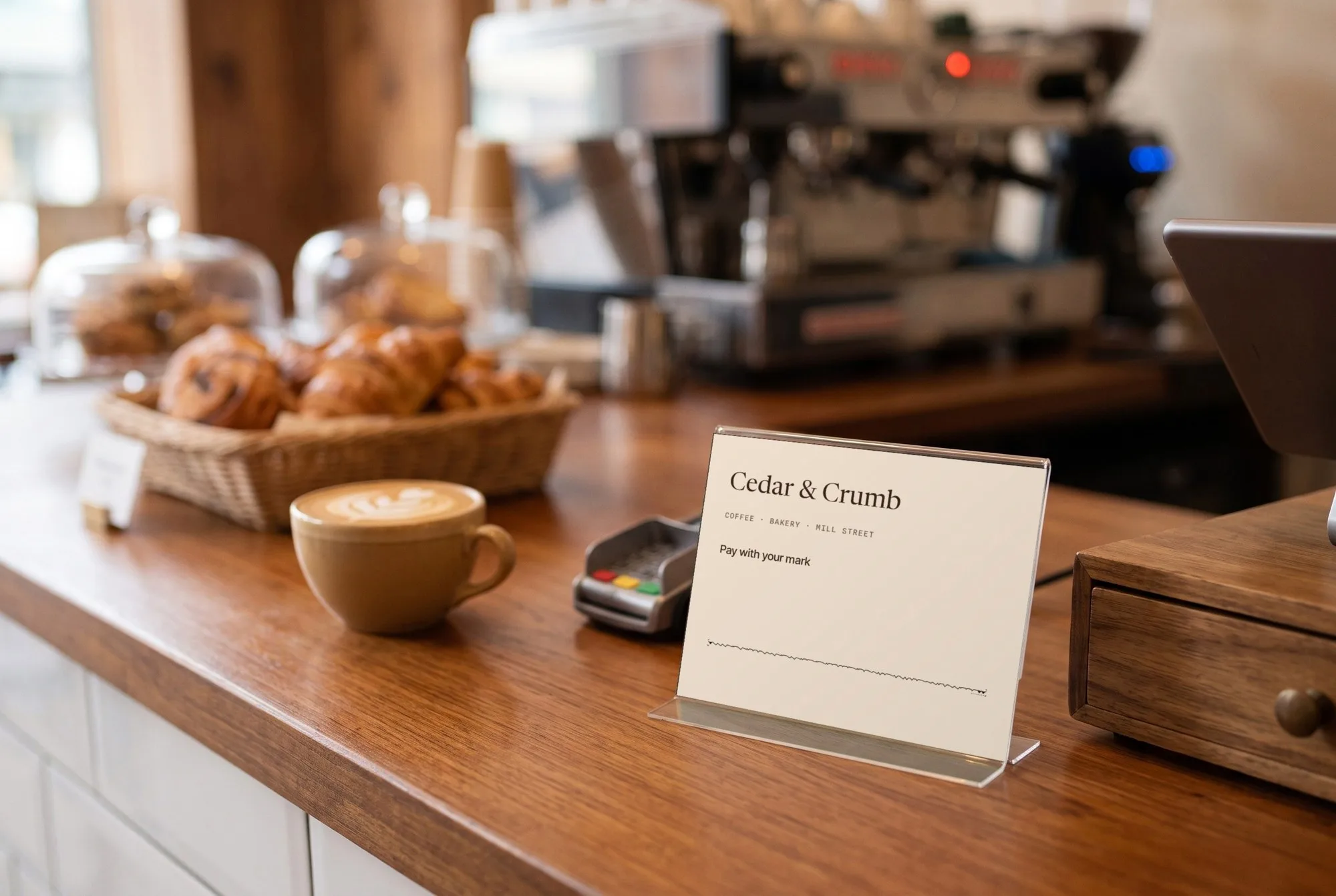
A payment that works once
At the counter you scan the shop's mark and pay with your own mark instead of a card number. The permission says this shop, this amount, this once. It works end to end in testing today; real payments come next. A copy of it buys nothing anywhere else, so thieves who broke into the shop's computers would find nothing they could spend.
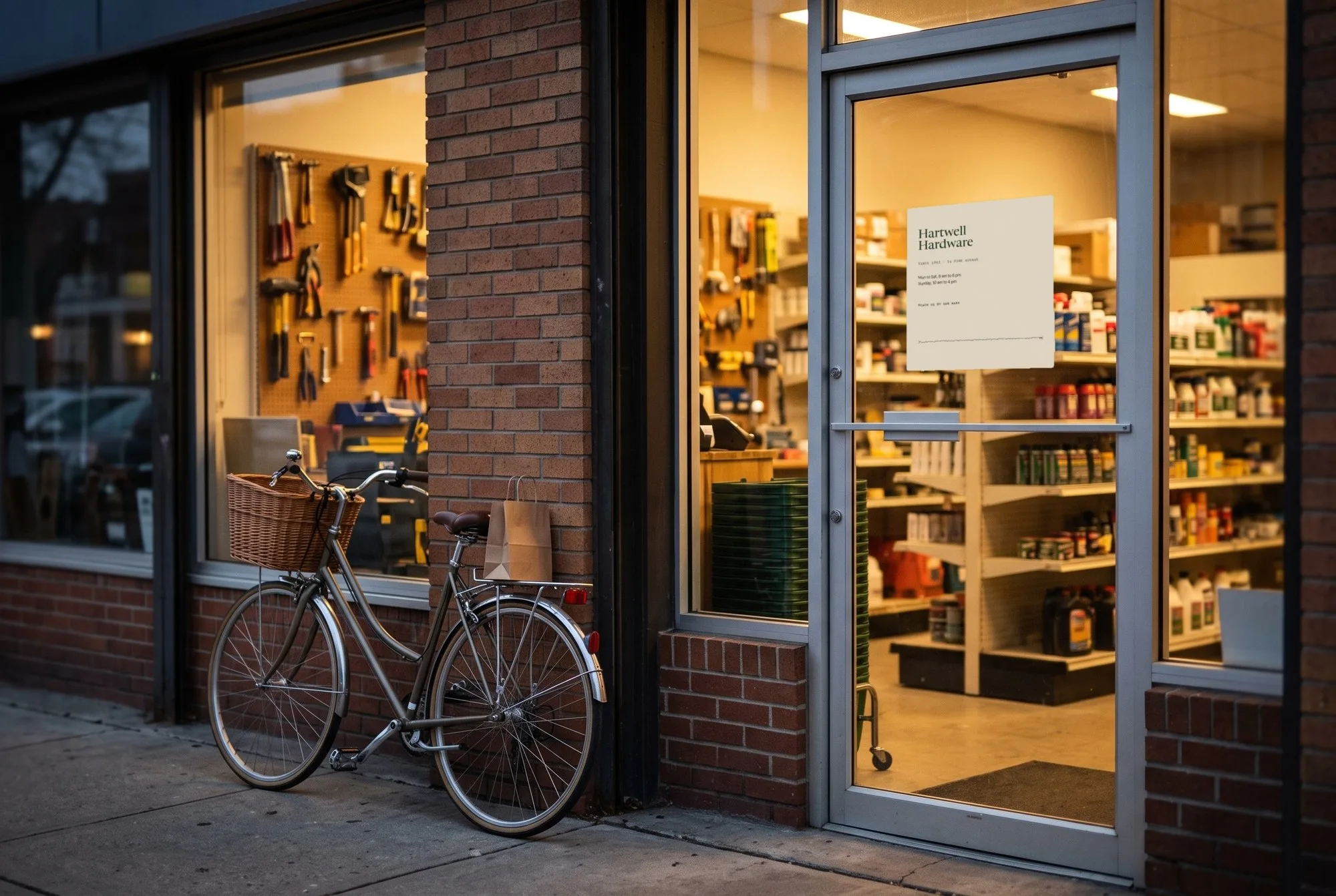
Reach a shop by its mark
A shop puts its mark in the window instead of a phone number. You scan it and send the shop a question, and the answer comes back signed with the shop's mark. Today every mark belongs to a person. Marks for businesses are what we are building now.
Fly with no name on file.
A boarding pass and a luggage tag. Both are in development.
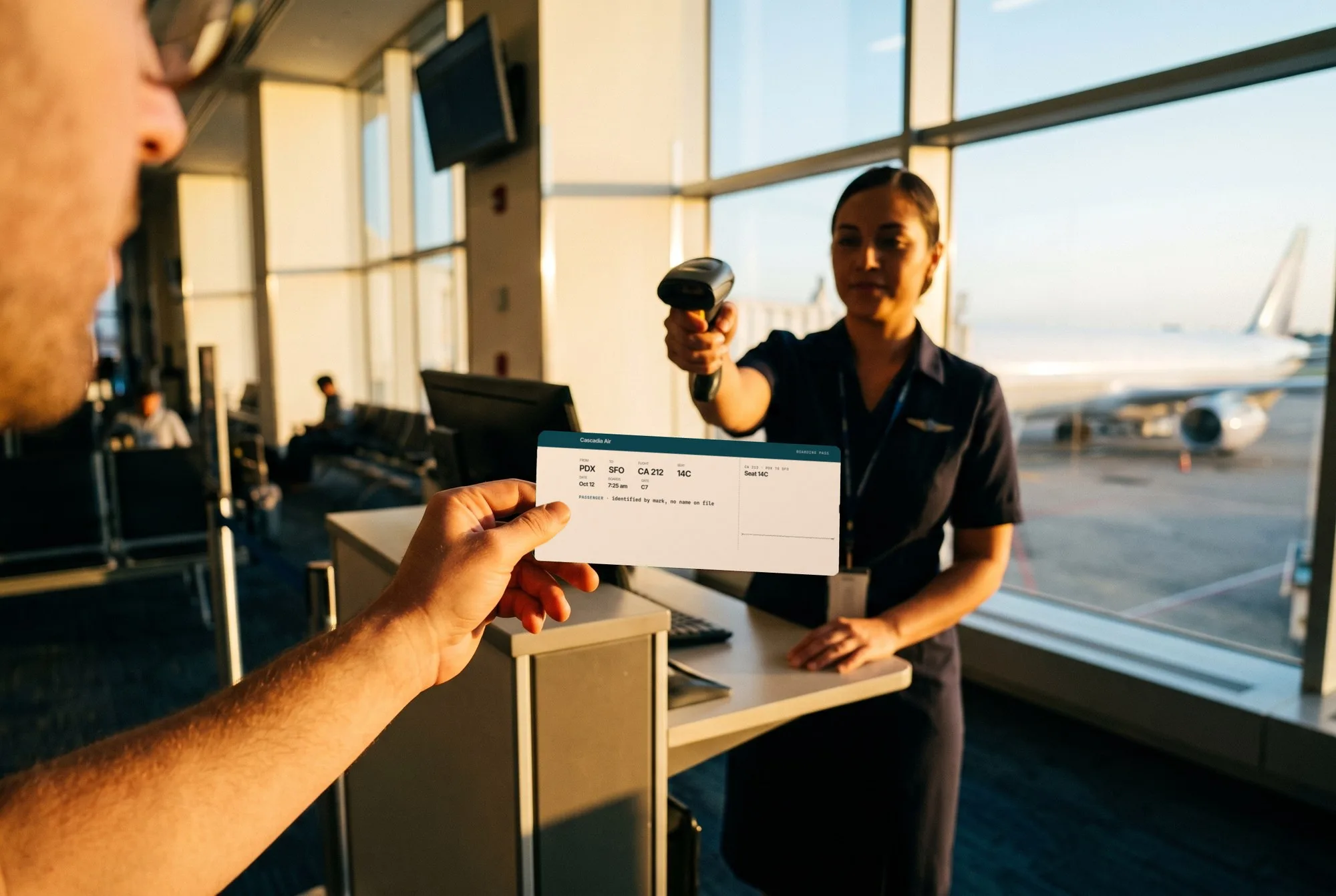
A boarding pass with no name on file
Your boarding pass carries your mark instead of your name. At the gate, the airline asks your mark only what it needs to know, and your phone answers. The airline keeps your answers and a receipt. It holds no copy of your passport.
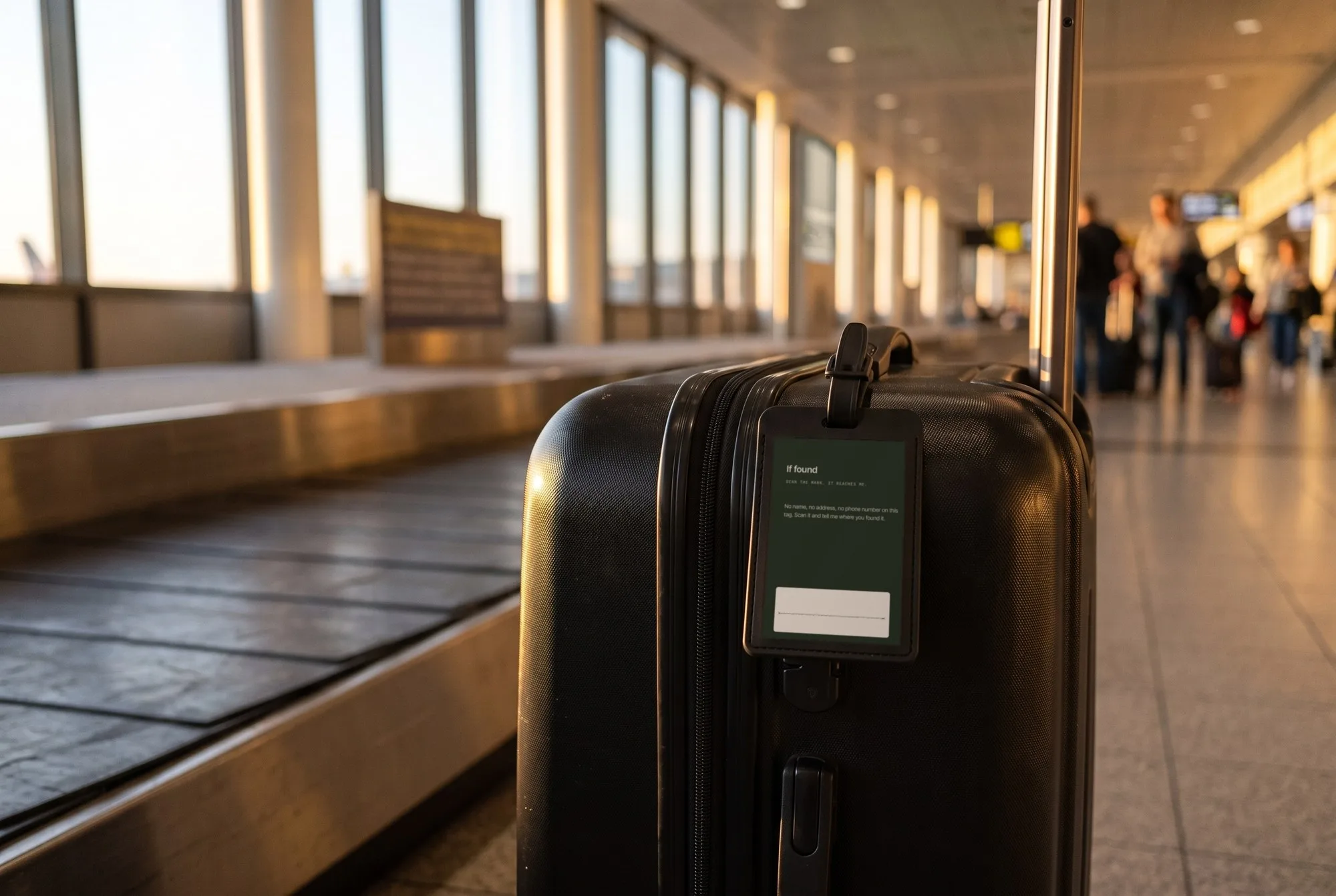
A lost bag that finds its owner
Your luggage tag carries your mark and nothing else: no name, no address, no phone number. Whoever finds the bag scans the tag, reaches you through your mark, and tells you where it is. They never learn where you live.
Today an ask is a set of yes or no questions. A message to the owner is what we are building.
It asks you first.
A service asks before it acts in your name. Next, an assistant carries a mark of its own and asks you the same way.
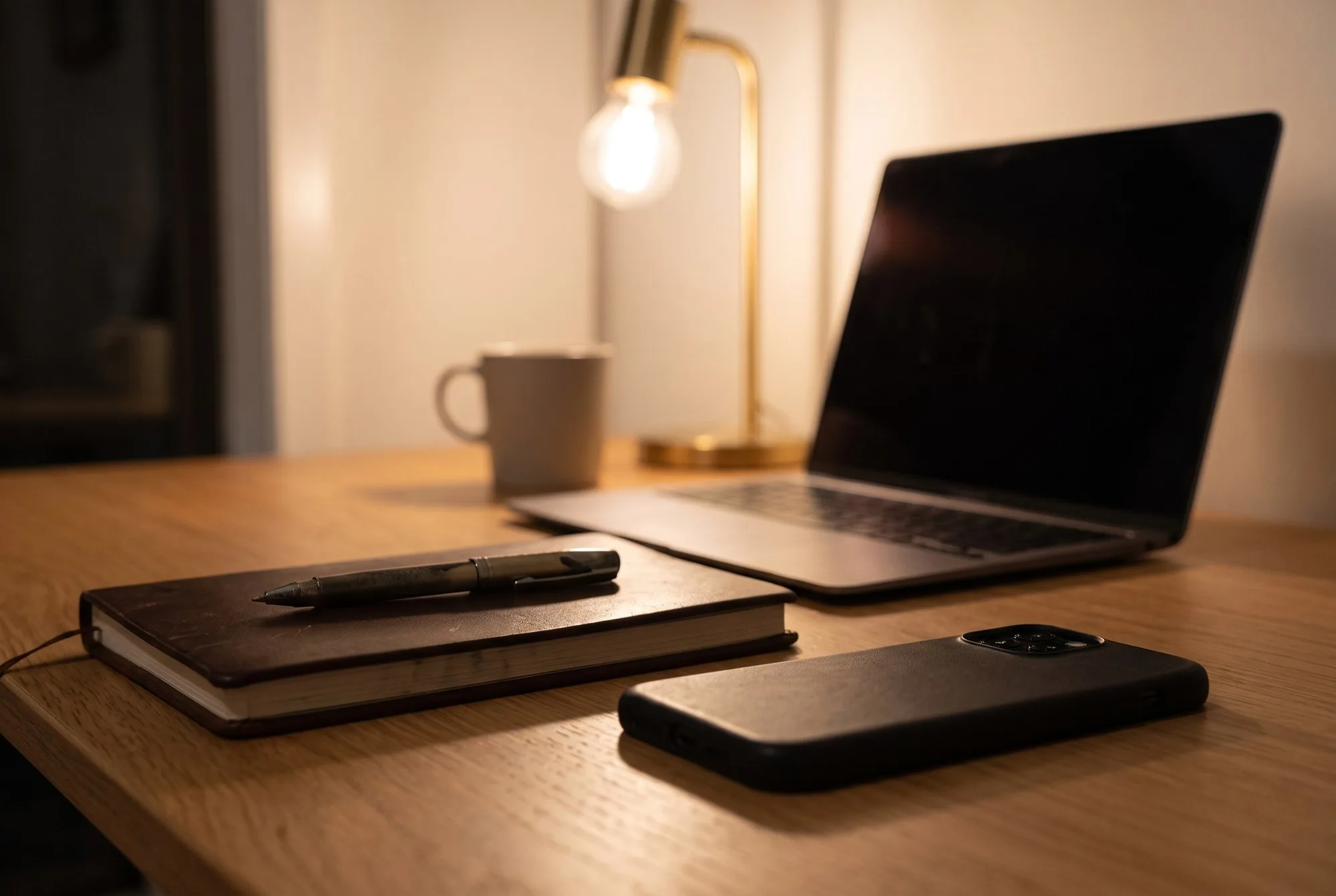
Was this you?
A service you use sees something start in your name, such as a new computer being added to your account. Before it goes ahead, it asks you. It shows a short code on its own screen and sends your phone the same question in its own words. You check that the codes match and tap "Yes, it was me", or "No, it wasn't me".
Synap is the first service to ask this way: it asks before a new device can approve anything on an account. It is in testing.
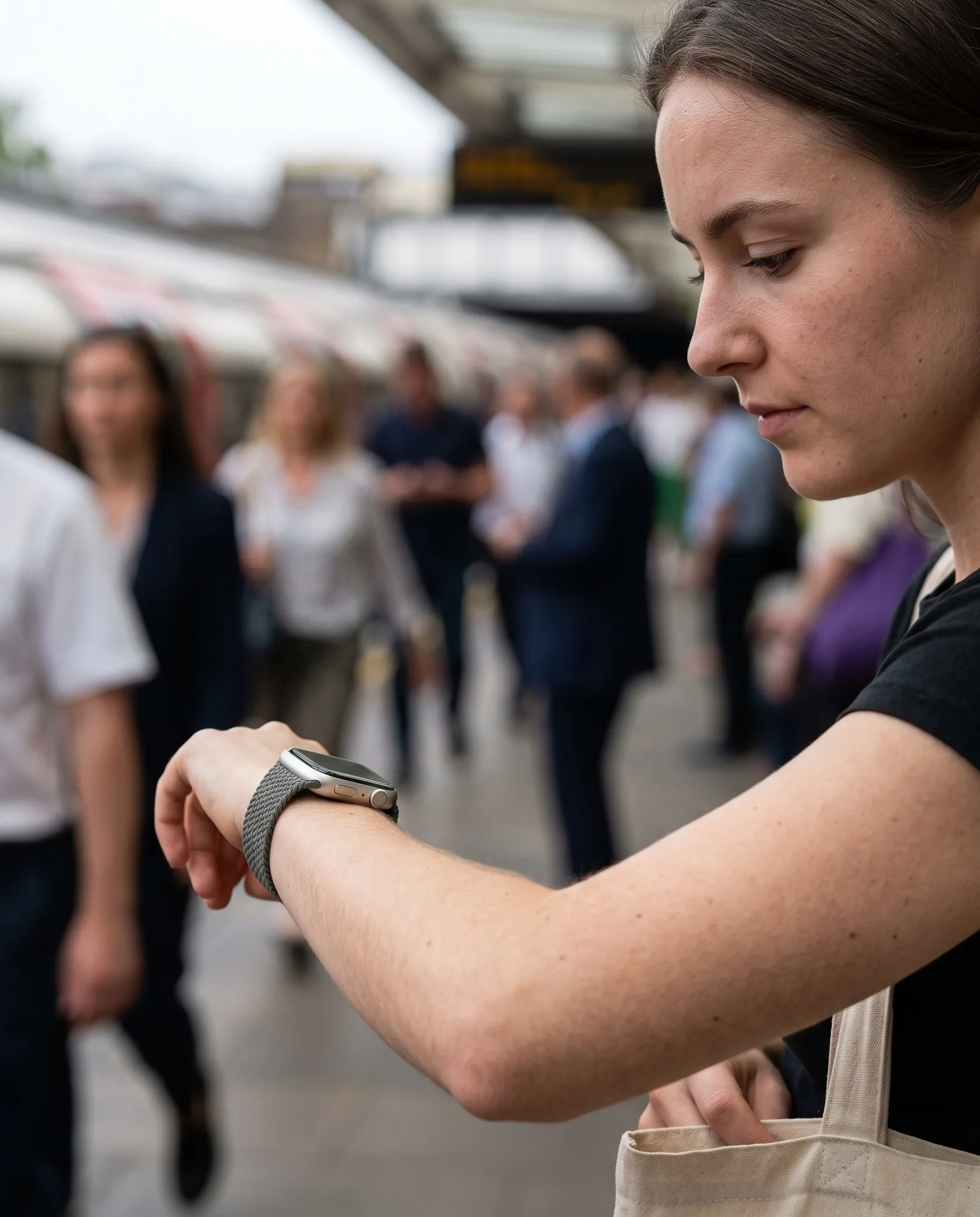
An assistant with its own mark
An AI assistant works for you inside the systems people already use: a phone line, a counter, a locker, a form, a clinic's front desk. It carries its own mark and acts only within limits you signed. For anything that matters, it asks you first, and you confirm on your phone or your wrist.
Asking first already runs in Synap: what an agent drafts waits until its person approves it from a linked phone, and linking that phone goes through a SigWave confirm, which is in testing. Marks for agents are what we are building now.
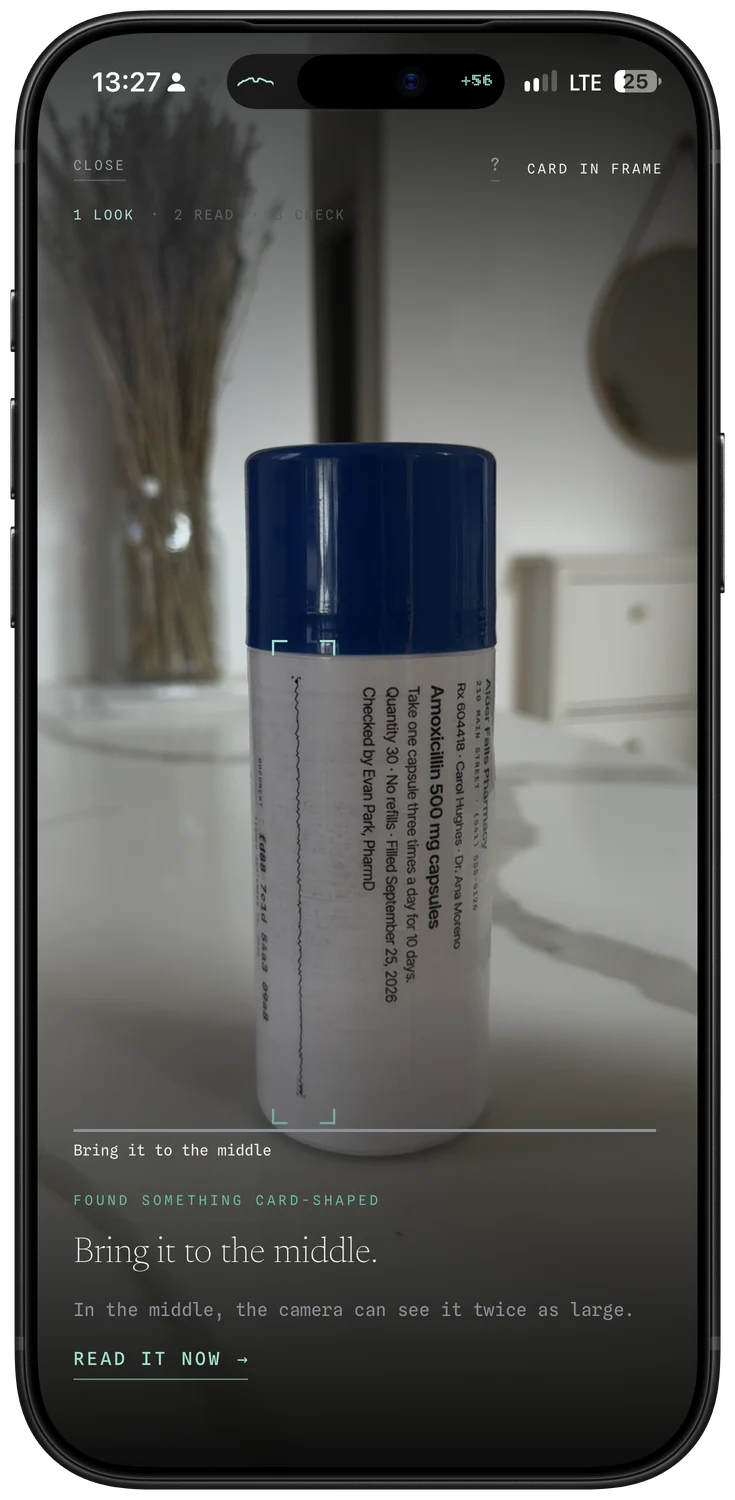
Ask your prescription a question
The label on your prescription bottle carries the mark of the doctor's office that prescribed it. Scan the mark with your phone and ask about this prescription: is this what my doctor prescribed, can I take it with food. The answer comes from the prescribing doctor's own AI agent, signed with the doctor's office mark, so you know it is theirs. Anything urgent is routed to the doctor. It answers questions about this prescription and passes the rest on. It does not diagnose.
One piece already runs in Synap, Synaping's personal knowledge system: an AI agent that drafts, and waits for its person to approve before anything goes out. Marks for doctors' offices and their agents are what we are building now. No SigWave mark takes part in this today.
The same mark, everywhere else.
We are working on these now. Where part of one already runs in Synap, the card says so. Each one uses the same mark you can make today, answering only when you say so.
A photo that carries its maker's mark
A photo or a recording carries the mark of the person who made it. Anyone can check whose mark it carries and whether it was changed since. A copy with the mark stripped off cannot be checked at all. Synap already puts a public time stamp on documents that anyone can check without relying on us; photos and recordings are not covered yet.
One person, one vote
You show you are allowed to vote, or to get help you are owed, and no office has to build a file on you to check. The office learns that you may. It does not learn anything else about you. The yes-or-no ask it needs is live in SigWave today; an office that can stand behind the answer has not joined yet.
A new doctor, only the part she needs
You see a new doctor. She gets the part of your medical record the visit needs, for as long as the care lasts. When care ends, the permission ends with it, instead of staying in a file for good.
The share-and-withdraw part runs today in Synap. No medical record or care provider product has been built on it yet.
Your work, on loan to your employer
What you learn and make at a job stays yours. You lend it to the company while you work there, and take it back when you leave. Today you hand it over on the first day.
The lending part runs today in Synap: you share chosen entries with another party and withdraw them, after which their searches find nothing and a receipt records it. It cannot erase a copy someone already saved elsewhere. SigWave marks join it next.
A bank's mark, checked against the bank
Today every mark belongs to a person, and a phone that reads one says only what the mark calls itself. Next, a bank gets a mark of its own, and your phone can tell it is really the bank. A scam that calls itself a bank would fail that check.